Do partnerships receive form 1099? — Yes, absolutely. The IRS requires businesses to issue a 1099-NEC or 1099-MISC to a general partnership or multi-member LLC taxed as a partnership when payments reach $600 or more for services, rents, or qualifying income during the tax year. Unlike S-Corps and C-Corps, partnerships do not qualify for the standard corporate exemption under IRS Publication 1281, making 1099 reporting mandatory across virtually all partnership payment categories in 2026.
Understanding Do Partnerships Receive Form 1099 Under 2026 IRS Rules
Do partnerships receive form 1099 is one of the most critical compliance questions business owners and accounting professionals must resolve correctly before issuing any vendor payments.
The answer is unambiguous under current IRS rules — partnerships occupy a fundamentally different tax position than corporations, and that difference carries direct 1099 reporting consequences for every business that pays them.
Getting this wrong exposes your business to IRS penalties starting at $60 per missed form and scaling to $330 per form for intentional disregard in the 2026 tax year — making accurate entity identification a non-negotiable operational priority.
Statutory Compliance Requirements for Businesses
The governing statutory authority is IRC § 6041 and § 6041A, which mandate information return filing for all payments of $600 or more made to partnerships in the course of a trade or business. Partnerships are explicitly excluded from the corporate exemption that protects S-Corps and C-Corps from standard 1099 reporting requirements.
This exclusion applies regardless of whether the partnership is a general partnership, limited partnership (LP), limited liability partnership (LLP), or a multi-member LLC electing partnership taxation on its federal return. All four entity variants trigger the same 1099 reporting obligation when the $600 threshold is crossed.
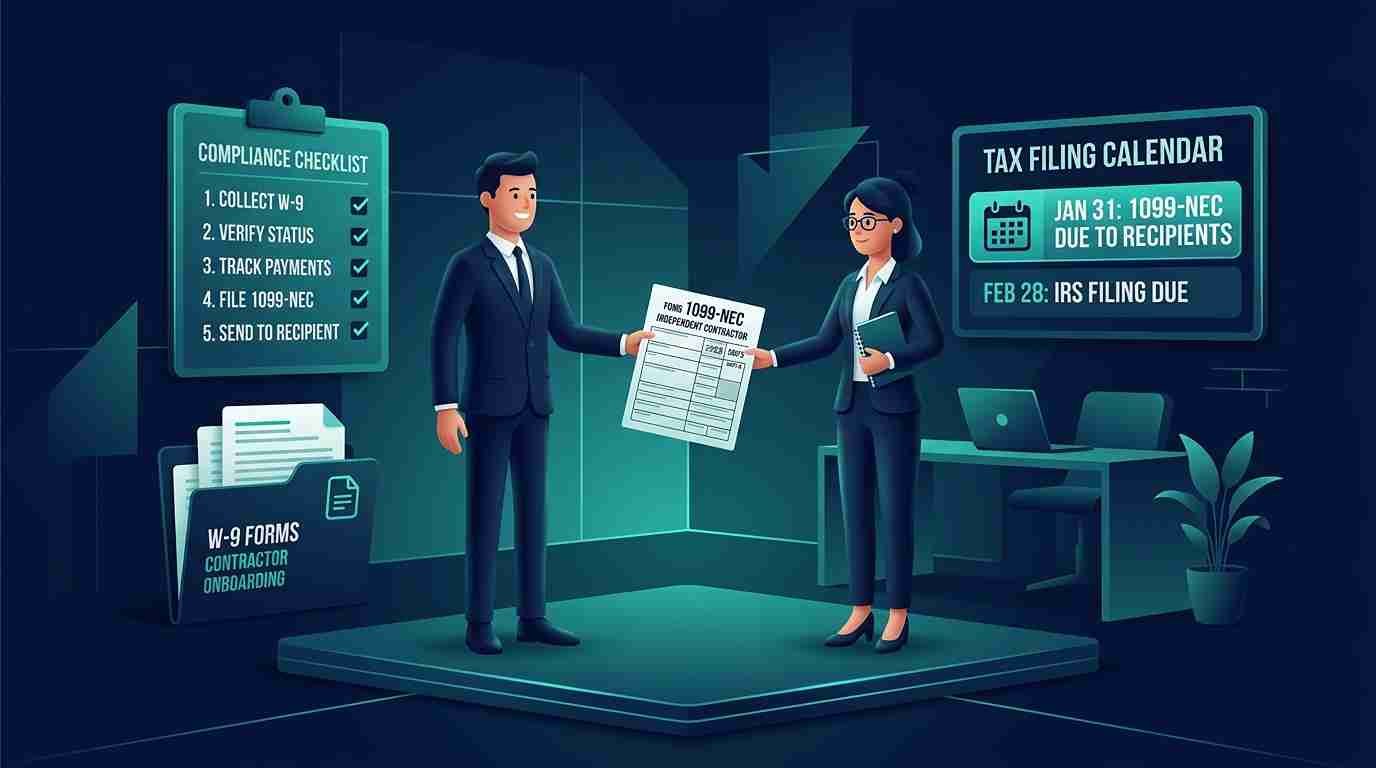
The essential first step before issuing any payment is collecting a Form W-9 from the partnership entity. Box 3 of the W-9 will confirm the entity’s federal tax classification — and if it shows partnership, your 1099 filing obligation is fully and immediately activated.
For the complete official IRS guidance on partnership information return requirements, refer to the IRS Instructions for Forms 1099-MISC and 1099-NEC.
Understanding whether do partnerships receive form 1099 obligations extend to LLC-structured partnerships is equally important. If a multi-member LLC has not elected corporate tax treatment, it is taxed as a partnership by default — meaning it receives the exact same 1099 treatment as a traditional general partnership under current IRS rules. To understand how LLC partnerships interact with 1099 reporting requirements, review the specific LLC-partnership classification rules that apply to your vendor payment scenario.
It is also essential to understand whether general partnerships get 1099 forms under the same statutory framework, since the filing obligations across all partnership variants flow from the same core IRS authority and threshold rules.
Quick Reference Compliance Matrix
| Partnership Entity Variant | 1099 Required | Applicable Form | IRS Authority |
|---|---|---|---|
| General Partnership | Yes — at $600+ | 1099-NEC / 1099-MISC | IRC § 6041 |
| Limited Partnership (LP) | Yes — at $600+ | 1099-NEC / 1099-MISC | IRC § 6041 |
| Limited Liability Partnership (LLP) | Yes — at $600+ | 1099-NEC / 1099-MISC | IRC § 6041 |
| Multi-Member LLC (Partnership Default) | Yes — at $600+ | 1099-NEC / 1099-MISC | IRC § 6041A |
| Partnership — Legal Fee Payments | Yes — no exemption | 1099-NEC | IRC § 6045(f) |
| Partnership — Medical Payments | Yes — no exemption | 1099-MISC | IRC § 6041(a) |
| Partnership — Rent Payments $600+ | Yes — mandatory | 1099-MISC Box 1 | IRC § 6041 |
| Partnership refusing W-9 | Backup Withhold 24% | W-9 / Form 945 | IRC § 3406 |
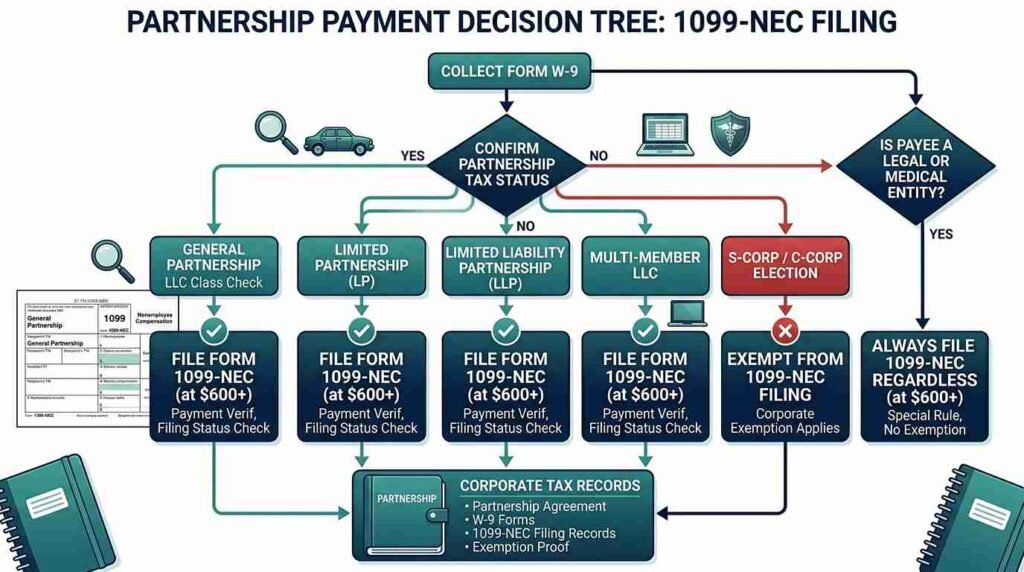
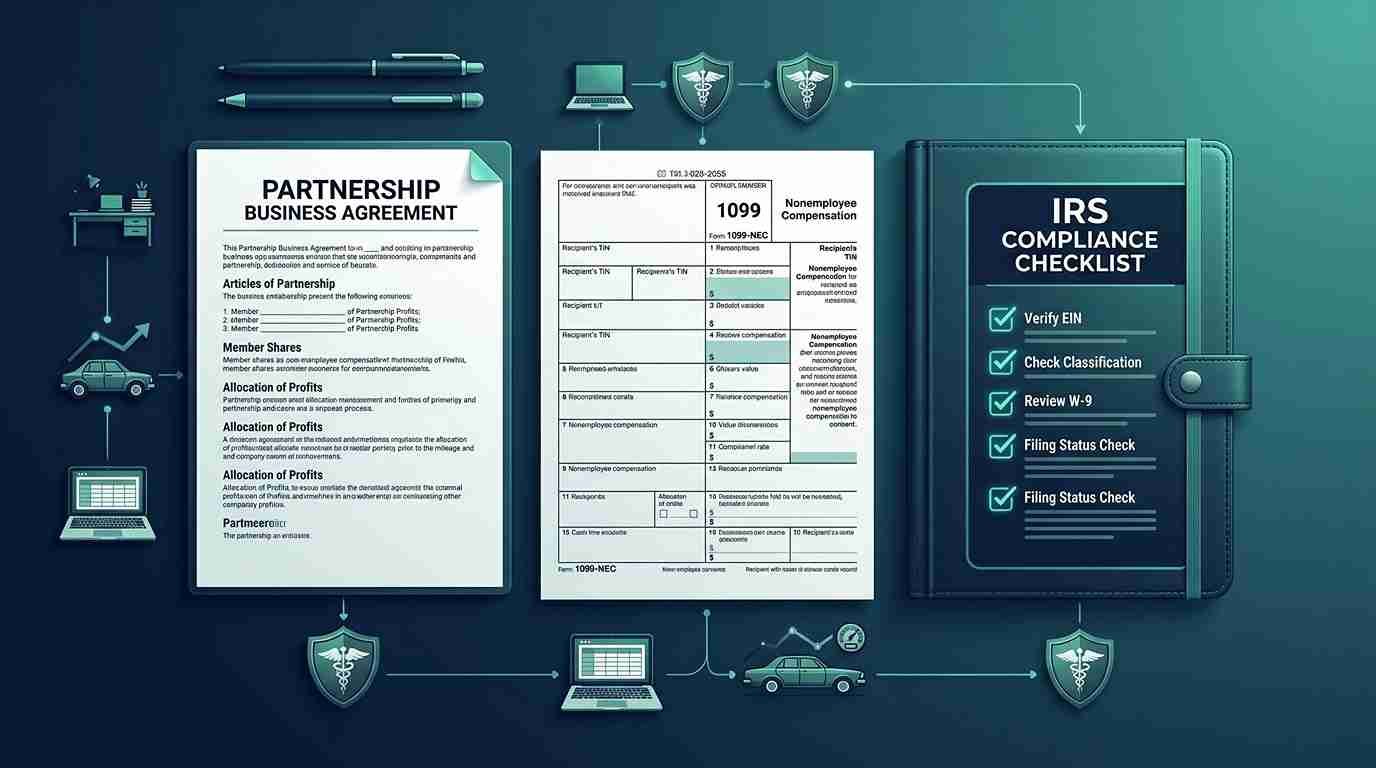
Do Partnerships Receive Form 1099 Compliance Workflow Matrix
Do General Partnerships Get 1099 Forms Under the Same Rules
General partnerships — the most basic and common partnership structure — are among the clearest 1099 reporting targets under IRS rules. There is no exemption, no threshold exception beyond the standard $600 minimum, and no corporate shield available.
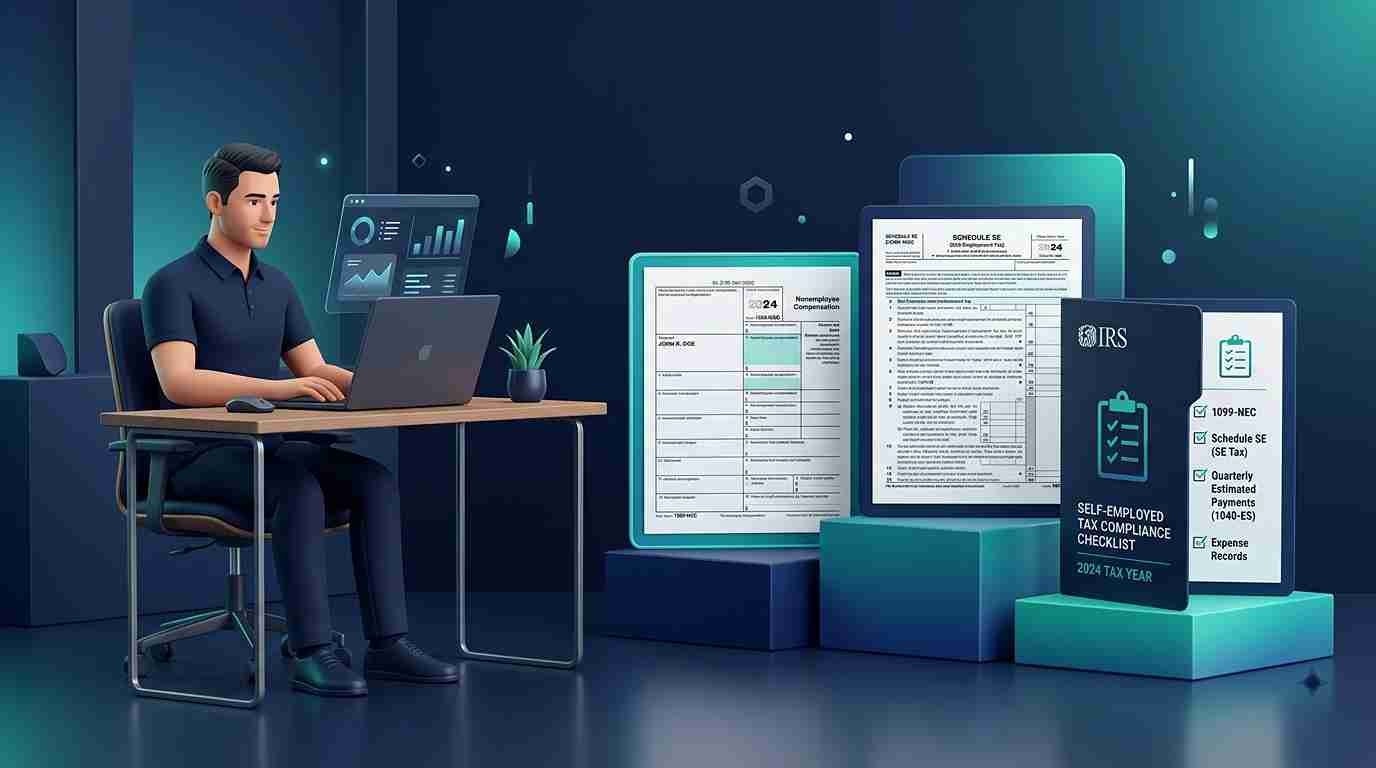
When your business pays a general partnership $600 or more for services during the calendar year, a 1099-NEC must be issued by January 31 of the following year. The partnership then distributes this income information to its individual partners via Schedule K-1, who each report their proportional share on their personal tax returns.
Failure to issue the required 1099 does not eliminate the partnership’s tax obligation — it simply removes your documentation trail and creates direct penalty exposure for your business.
Do LLC Partnerships Get 1099 Forms the Same Way as Traditional Partnerships
This is where significant confusion arises for many business payers — and where the W-9 becomes absolutely indispensable.
A multi-member LLC that has not filed Form 8832 to elect corporate taxation is treated as a partnership by default under IRS Treasury Regulation § 301.7701-3. This means it receives identical 1099 treatment to a traditional general or limited partnership — full reporting required at the $600 threshold.
However, a multi-member LLC that has elected S-Corp or C-Corp status via Form 8832 or Form 2553 shifts into the corporate exemption category — and the 1099 obligation is eliminated for standard service payments.
The only way to know which category applies is through a properly completed Form W-9. Never assume LLC tax status based on the entity’s name, branding, or verbal confirmation from the vendor.
Do Limited Liability Partnerships Get 1099 Forms in 2026
Limited Liability Partnerships (LLPs) are a distinct entity type commonly used by law firms, accounting firms, and medical practices. Despite the “limited liability” designation that superficially resembles corporate protection, LLPs are taxed as partnerships for federal income tax purposes.
This means businesses paying LLPs for services must issue 1099-NEC forms at the $600 threshold — with a critical additional layer. Since LLPs are overwhelmingly concentrated in legal and medical professional services, virtually every payment made to an LLP will simultaneously trigger the attorney payment rule under IRC § 6045(f) or the medical payment rule under IRC § 6041(a).
Both of these rules require 1099 reporting regardless of corporate status — meaning even if an LLP somehow qualified for a corporate exemption, payments for legal and medical services would still mandate a 1099 filing.
The January 31, 2026 Deadline and Electronic Filing Requirements
The 1099-NEC recipient copy deadline is January 31, 2026 — this is the hard deadline by which the partnership must receive their copy of the form. Missing this date triggers penalties even if the IRS copy is filed on time.
The IRS paper filing deadline for 1099 forms is February 28, 2026. For electronic filing, the deadline extends to March 31, 2026. However, businesses filing 10 or more information returns of any type are now required to file electronically under IRS regulations effective from the 2024 tax year onward.
Most modern payroll and accounting platforms — including QuickBooks, Gusto, and ADP — handle electronic 1099 filing directly through the IRS FIRE (Filing Information Returns Electronically) system, eliminating the need for manual paper submissions for most business payers.
Frequently Asked Questions (Gutenberg Block Ready)
Do partnerships receive form 1099 if they are paid through a business credit card or PayPal?
No — with an important qualification. Payments made to partnerships through third-party settlement networks such as PayPal Business, Venmo for Business, Square, or via business credit card transactions are reportable by the payment processor — not by the paying business. In these cases, the processor issues a 1099-K directly to the partnership, and your 1099-NEC obligation for those specific transactions is eliminated. However, payments made via check, ACH bank transfer, wire transfer, or cash remain your direct 1099 filing responsibility regardless of the partnership entity type involved.
Does a partnership need to issue 1099 forms to its own vendors and subcontractors?
Yes — and this is a compliance obligation that many partnership-structured businesses overlook entirely. A partnership that pays its own vendors, subcontractors, or service providers $600 or more during the tax year carries the exact same 1099 filing obligations as any other business entity. The fact that the partnership itself receives 1099 forms from its clients does not alter or reduce its independent obligation to issue 1099 forms to its own payees. Both obligations operate simultaneously and are tracked separately by the IRS information return matching system.
Do partnerships receive form 1099 even if they have an EIN instead of a Social Security Number on file?
Yes. Having an Employer Identification Number (EIN) rather than a Social Security Number does not exempt a partnership from 1099 reporting. The EIN is simply the partnership’s taxpayer identification number used for federal tax purposes — it does not confer corporate status or trigger any exemption. The 1099 is issued using the partnership’s EIN as reported on their Form W-9, and the IRS cross-references this against the partnership’s Form 1065 information return to verify income reporting consistency across all partners during the annual matching cycle.