Do LLP get 1099 forms is a critical compliance question for any business that pays a limited liability partnership for services. Under 2026 IRS rules, LLPs (Limited Liability Partnerships) are treated as partnerships for federal tax purposes, meaning they are not exempt from Form 1099-NEC reporting the way corporations are. Any business that pays an LLP $600 or more for services during the tax year must issue a 1099-NEC to that LLP and file a copy with the IRS by the applicable deadline. Failure to comply exposes your business to IRS penalties up to $660 per unfiled form.
Understanding Do LLP Get 1099 and Why It Matters in 2026
Do LLP get 1099 is a question that trips up thousands of accounts payable departments every filing season because the name “Limited Liability Partnership” contains the word “limited” — which some mistakenly associate with corporate-level exemptions. That assumption is incorrect and costly.
The IRS does not treat an LLP as a corporation for information reporting purposes. Under federal tax classification rules, an LLP is treated as a partnership, and partnerships are explicitly listed as non-exempt payees under Treasury Regulation § 1.6049-4(c). This means the standard corporate exemption that shields C-Corporations and S-Corporations from receiving 1099 forms does not apply to LLPs.
For the 2026 tax year, any business making service payments to an LLP must include that LLP in its 1099 vendor tracking system from the very first payment.
Statutory Compliance Requirements for Businesses
The IRS framework governing whether do LLP get 1099 obligations apply is rooted in the partnership classification rules under Internal Revenue Code § 6041 and § 761. For 2026 compliance, the following rules apply without exception.
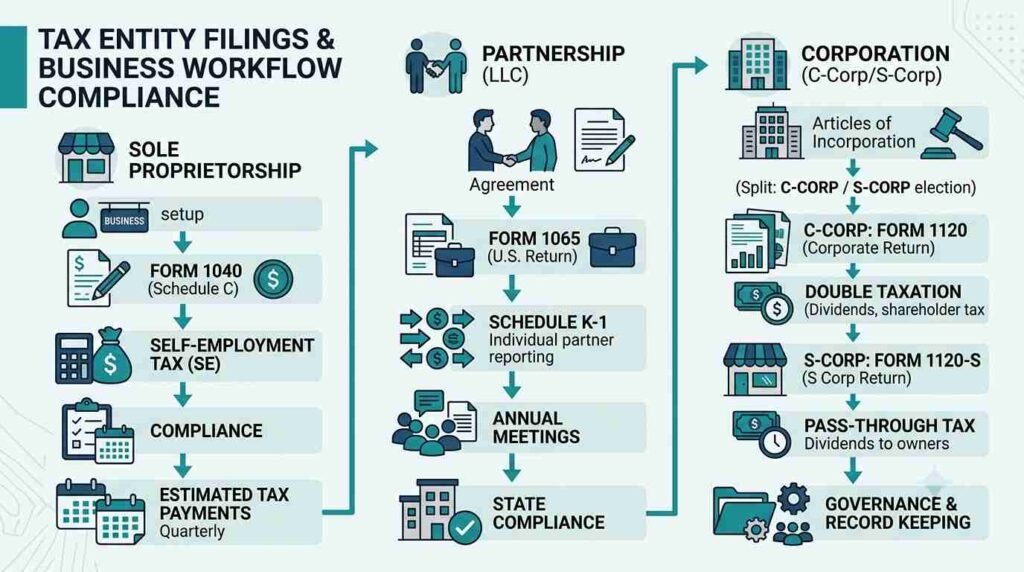
LLPs Are Treated as Partnerships by the IRS. A Limited Liability Partnership is a state-registered business structure that provides liability protection to its partners while maintaining pass-through taxation at the federal level. Because LLPs do not pay corporate income tax at the entity level — instead passing income through to individual partners — the IRS classifies them identically to general partnerships for information reporting purposes. This is precisely why do LLP get 1099 has the same answer as do partnerships get 1099: yes, when the $600 threshold is met.
The $600 Threshold Rule Applies Fully. If your business paid an LLP $600 or more for services rendered during the 2026 calendar year, a Form 1099-NEC is required. This threshold applies to the cumulative total of all payments made to the same LLP across the full year — not per invoice or per transaction. A single payment of $200 in January and four additional payments of $100 each throughout the year would combine to $600 and trigger the filing requirement.
Form W-9 Is the Verification Tool. Before making any payment to an LLP vendor, your business must collect a completed IRS Form W-9. On the W-9, an LLP will typically check the Partnership box, confirming their non-exempt status. If an LLP incorrectly checks a corporate box, you are protected from penalty if you relied on that W-9 in good faith — but this underscores why W-9 collection must happen before the first payment, not at year-end.
The Attorney Exception Applies to LLPs as Well. If the LLP provides legal services — as many law firms structured as LLPs do — the attorney exception under IRS Notice 2003-73 requires a 1099-NEC regardless of any other classification consideration. This means that even if there were ambiguity about whether do LLP get 1099 rules applied, legal fee payments to any LLP law firm resolve the question immediately in favor of required reporting.
For businesses that also work with LLC partnerships, understanding do LLC partnerships get 1099 provides a parallel compliance framework that clarifies how multi-member LLCs taxed as partnerships are treated under the same 2026 IRS rules that govern LLP reporting.
The complete IRS guidance on partnership information reporting, including current W-9 instructions and electronic filing requirements, is available at the IRS official website.
Because many professional LLPs operate in legal, accounting, and consulting industries, businesses that regularly engage these vendors should also understand do partnerships get 1099 to ensure their entire non-corporate vendor pool is correctly classified and tracked throughout the 2026 tax year.
Quick Reference Compliance Matrix
| LLP Scenario | 1099-NEC Required | IRS Rule Reference |
|---|---|---|
| LLP providing general services ≥ $600 | Yes | IRC § 6041 — partnership classification |
| LLP providing legal services ≥ $600 | Yes | IRS Notice 2003-73 — attorney exception |
| LLP providing medical services ≥ $600 | Yes | Healthcare provider exception |
| LLP paid less than $600 total in year | No | Below de minimis threshold |
| LLP paid via PayPal / Stripe / Venmo | No | Platform issues 1099-K separately |
| LLP with valid W-9 on file | Yes (if ≥ $600) | W-9 confirms partnership non-exempt status |
| LLP without W-9 on file | Yes + 24% backup withholding | IRC § 3406 — backup withholding rules |
How to Correctly Process 1099 Forms for LLP Vendors in 2026
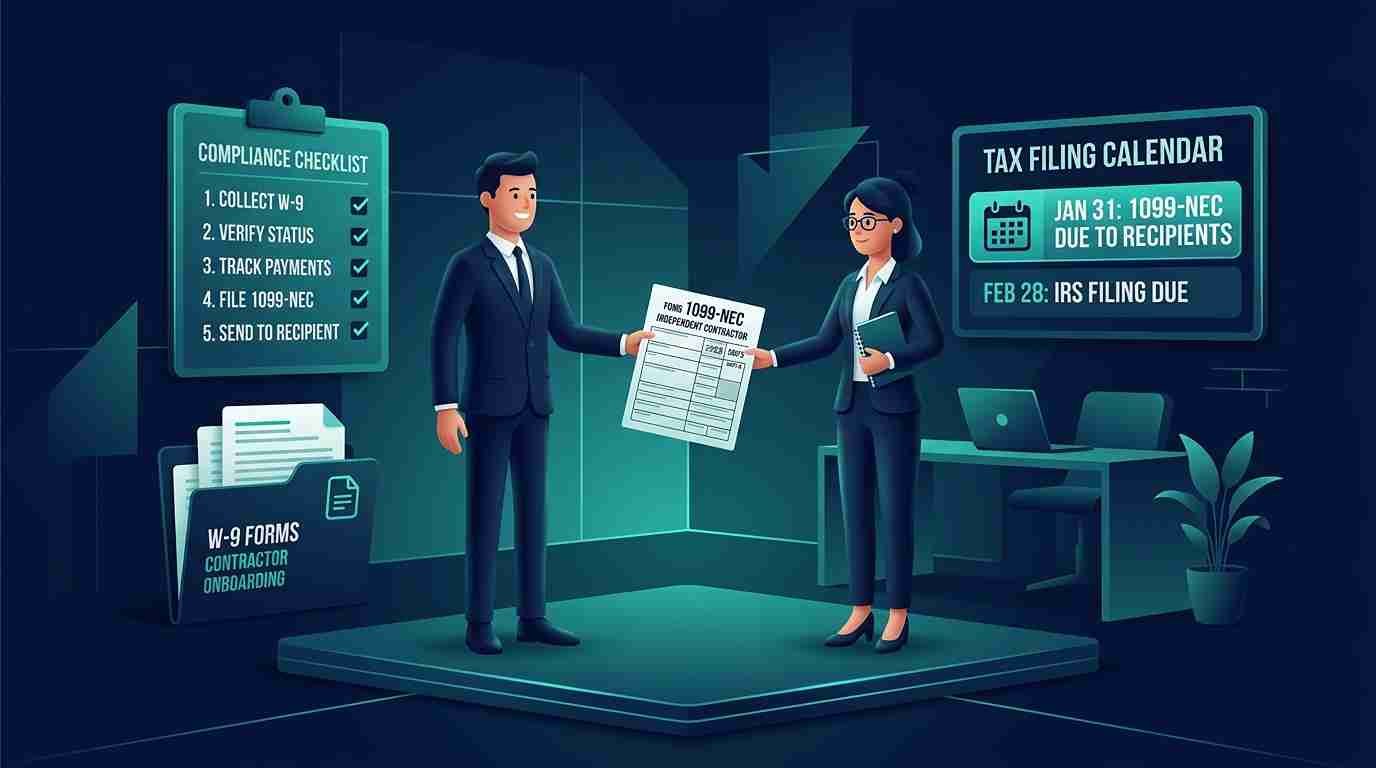
Knowing that do LLP get 1099 rules require reporting is only the first step. Executing the filing correctly requires a structured four-step process that your accounts payable team should implement at the start of every vendor relationship.
Step one is collecting a completed Form W-9 from the LLP before any payment is issued. The W-9 will confirm the LLP’s legal name, EIN, and partnership classification — all three of which are required to complete the 1099-NEC accurately.
Step two is tracking cumulative payments to the LLP throughout the year inside your accounting system. Flag the vendor record as a 1099-required entity the moment their W-9 confirms partnership status so no payments fall through the cracks.
Step three is issuing Form 1099-NEC to the LLP by January 31, 2026, reporting the total amount paid in Box 1. Deliver the form to the LLP’s address on record and simultaneously file the copy with the IRS by the same deadline.
Step four is retaining the W-9 and a copy of the issued 1099-NEC in your records for a minimum of four years in case of IRS examination. This documentation is your primary defense against penalty assessment if the LLP later disputes the reported amount or the IRS initiates a matching inquiry.
Frequently Asked Questions (Gutenberg Block Ready)
Do LLP get 1099 forms under 2026 IRS rules?
Yes, do LLP get 1099 is answered clearly under 2026 IRS rules: limited liability partnerships are classified as partnerships for federal tax purposes and are therefore non-exempt payees under Treasury Regulation § 1.6049-4(c). Any business that pays an LLP $600 or more for services during the 2026 calendar year must issue a Form 1099-NEC to that LLP and file a copy with the IRS by January 31, 2026. The corporate exemption that protects C-Corporations and S-Corporations from 1099 reporting does not apply to LLPs under any standard circumstances.
Why do LLP get 1099 treatment instead of corporate exemption?
The reason do LLP get 1099 treatment rather than corporate exemption comes down to how the IRS classifies LLPs for federal tax purposes. Unlike C-Corporations and S-Corporations that pay or report tax at the entity level under corporate tax rules, an LLP is a pass-through entity that does not pay federal income tax at the partnership level. Instead, income passes through to the individual partners who report it on their personal returns. Because the IRS cannot track this pass-through income without an information return, the 1099 reporting requirement applies fully to all qualifying payments made to LLPs.
Do LLP get 1099 forms if they are a law firm or accounting firm?
Yes, and in the case of a law firm structured as an LLP, the attorney exception makes the 1099 requirement even more ironclad. Even if there were any question about whether do LLP get 1099 rules applied, payments of $600 or more for legal services to any entity — including LLP law firms — trigger a mandatory Form 1099-NEC requirement under IRS Notice 2003-73. Accounting firms and consulting practices structured as LLPs are also fully subject to 1099 reporting as standard partnership-classified non-exempt payees.
What happens if I do not issue a 1099 to an LLP that qualifies?
Failing to issue a required Form 1099-NEC to an LLP that qualifies under the do LLP get 1099 rules exposes your business to IRS penalties starting at $60 per form for filings up to 30 days late, rising to $310 per form for returns never filed, and reaching $660 per form if the IRS determines the failure was intentional. These penalties apply separately for failure to furnish the form to the LLP and failure to file the copy with the IRS, meaning one missed LLP vendor 1099 can generate two distinct penalty assessments in the same filing year.
Do LLP get 1099 forms if payments were made through a payment app?
If your business paid an LLP through a third-party payment network such as PayPal, Venmo, Stripe, or Square, you are generally not required to issue a Form 1099-NEC for those specific payments. The payment platform assumes the reporting responsibility and issues a Form 1099-K directly to the LLP when transaction thresholds are met. However, payments made via direct bank transfer, check, ACH, or wire to an LLP are fully subject to do LLP get 1099 reporting rules and must be tracked and reported by your business through the standard 1099-NEC process.