What is a 1099 vendor is a term used in US business and tax compliance to describe any individual, sole proprietor, partnership, or unincorporated business that provides services to a company and receives $600 or more in a calendar year, triggering a mandatory IRS Form 1099-NEC filing obligation. The IRS requires businesses to identify, screen, and report payments to qualifying 1099 vendors annually to ensure proper income reporting at the federal level. For the 2026 tax year, failure to issue required 1099 forms to eligible vendors can result in penalties ranging from $60 to $660 per unfiled form depending on how late the filing occurs.
Understanding What Is a 1099 Vendor and Why It Matters in 2026
What is a 1099 vendor is one of the most operationally critical questions any business owner, accounts payable department, or bookkeeper must answer before the 2026 filing season begins. A 1099 vendor is not defined by the vendor’s industry or the type of service they provide — it is defined entirely by their business structure and the dollar amount your company paid them during the tax year.
In simple terms, if your business paid a non-corporate service provider $600 or more in a single calendar year, that vendor is a 1099 vendor and your business is legally obligated to issue them a Form 1099-NEC and file a copy with the IRS by the applicable deadline.
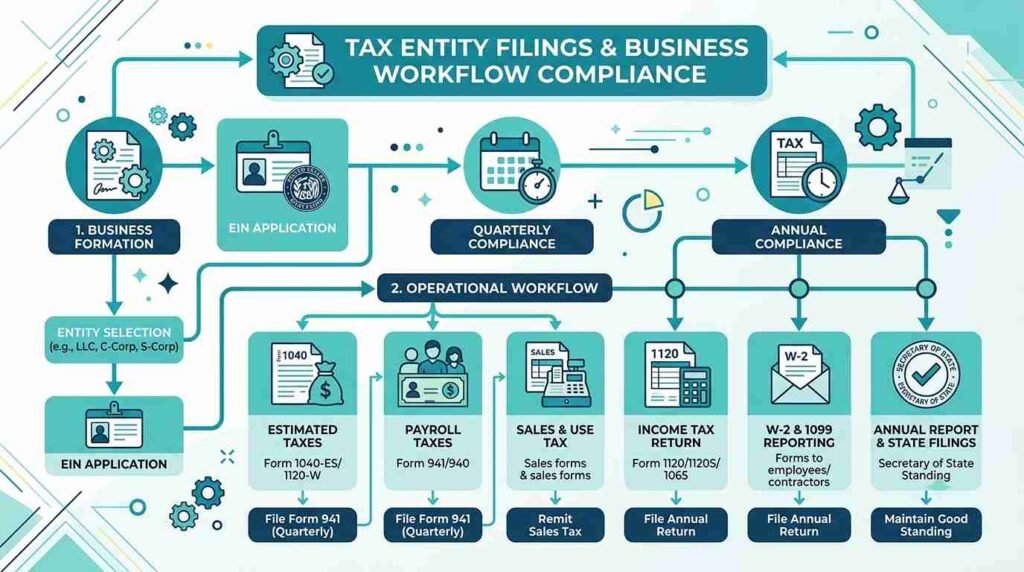
Statutory Compliance Requirements for Businesses
The IRS vendor reporting framework is governed primarily by Internal Revenue Code § 6041 and § 6041A, which require all businesses, partnerships, and self-employed individuals to report payments made in the course of a trade or business to any qualifying payee. For 2026 compliance, the operational rules are as follows.
The $600 Threshold Rule applies to all payments for services rendered by a non-corporate vendor. This includes fees paid to freelancers, independent contractors, consultants, attorneys, accountants operating as sole proprietors, cleaning services, repair technicians, and any other service provider who is not incorporated as a C-Corporation or S-Corporation.
Payments excluded from 1099 vendor reporting include payments made to corporations (with the critical exception of attorneys and medical providers, who must receive 1099s regardless of corporate status), payments made via third-party settlement networks such as PayPal or Stripe where the platform handles its own reporting via Form 1099-K, payments for merchandise or physical goods, and payments made to tax-exempt organizations.
Collecting vendor information is the first compliance step every business must complete. Before issuing any payment to a new vendor, businesses are required to collect a completed IRS Form W-9 from the vendor. The W-9 captures the vendor’s legal name, business name, Taxpayer Identification Number (TIN), and entity type — which is the determining factor in whether a 1099 is required.
For businesses managing a mix of incorporated and unincorporated vendors, understanding do incorporated companies get 1099 is essential to avoid both over-filing and under-filing vendor 1099s during the 2026 reporting cycle.
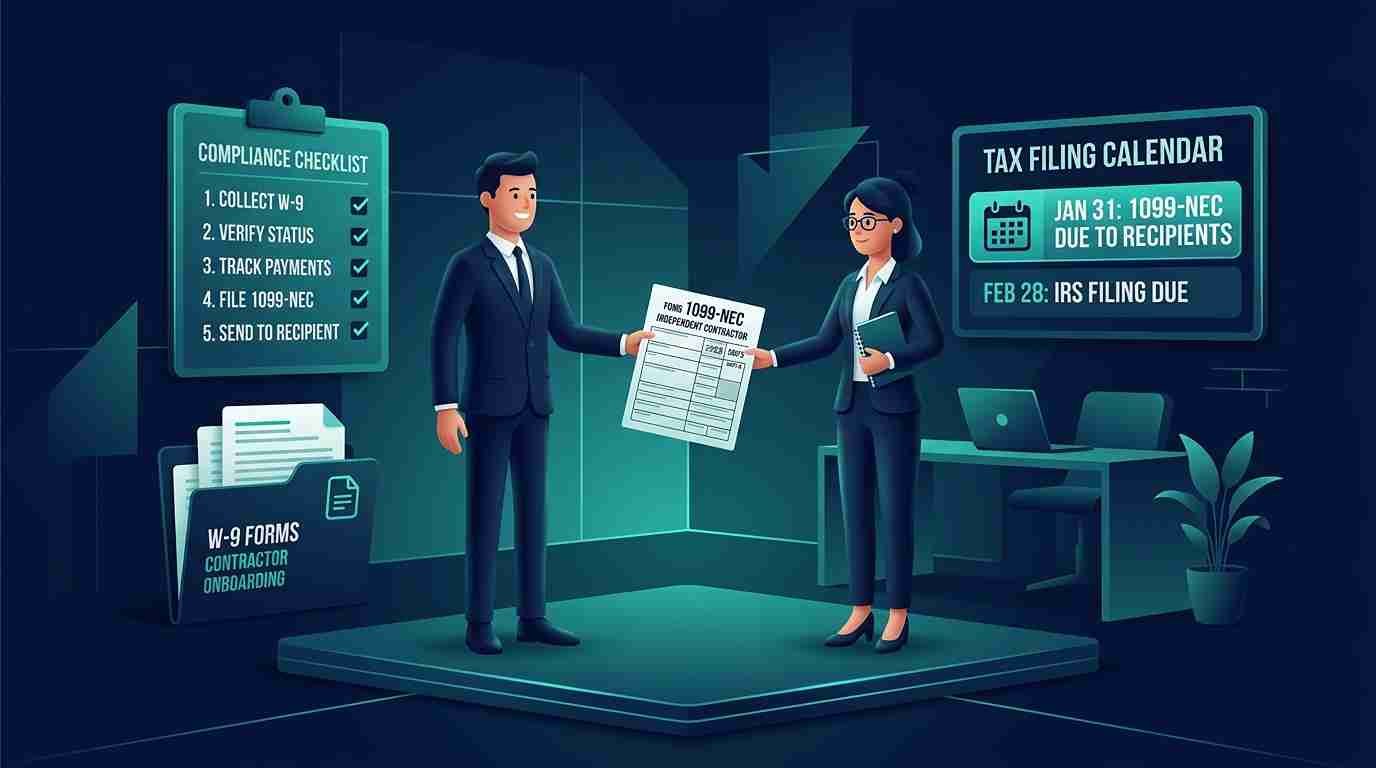
The 2026 deadline for furnishing Form 1099-NEC to vendors is January 31, 2026, and the same date applies for filing copies with the IRS. Businesses filing 10 or more information returns are required to file electronically through the IRS FIRE system or an approved third-party e-file provider. Full deadline details and electronic filing requirements are available directly at the IRS official website.
If your vendor pool includes LLCs, the entity classification rules become especially important. The tax treatment of an LLC depends entirely on how it has elected to be classified with the IRS, which directly determines whether a 1099 is required. Understanding do LLC receive 1099 will help your accounts payable team correctly classify every LLC vendor in your system before the 2026 deadline.
Quick Reference Compliance Matrix
| Vendor Type | 1099-NEC Required | Key Condition |
|---|---|---|
| Sole Proprietor / Individual | Yes | Payments ≥ $600 for services |
| Single-Member LLC (default) | Yes | Treated as sole proprietor by IRS |
| Partnership or Multi-Member LLC | Yes | Payments ≥ $600 for services |
| C-Corporation | No | Exempt except attorneys & medical providers |
| S-Corporation | No | Exempt except attorneys & medical providers |
| Attorney (any entity type) | Yes | All legal fee payments ≥ $600 |
| Medical / Healthcare Provider (any entity) | Yes | Payments ≥ $600 regardless of structure |
| Payments via PayPal / Venmo / Stripe | No | Platform issues 1099-K separately |
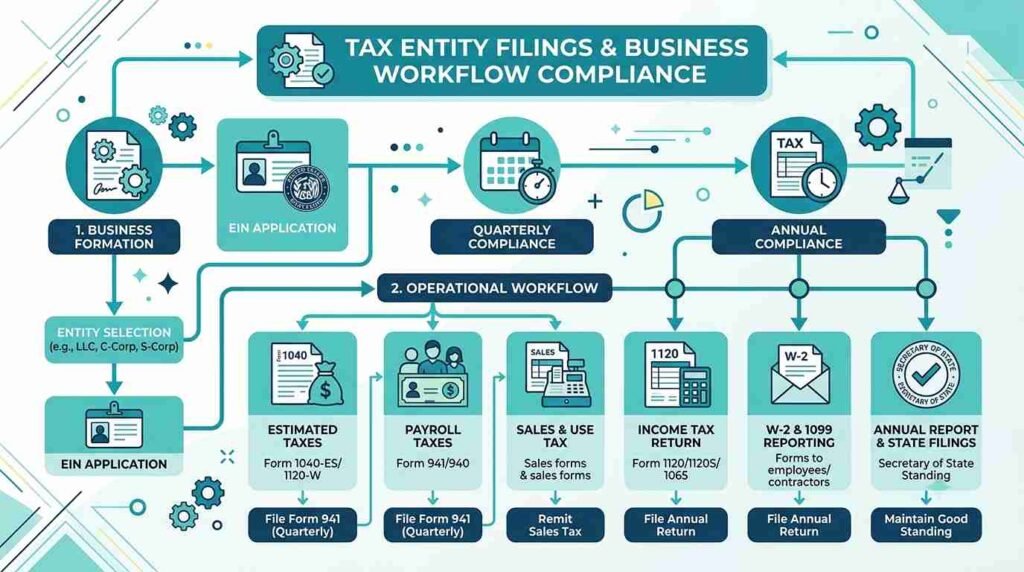
How to Properly Set Up and Manage 1099 Vendors in 2026
Building a compliant 1099 vendor management system before payments are made is far more efficient than scrambling to collect information at year-end. The following operational framework applies for the 2026 tax year.
Step one is collecting a valid Form W-9 from every new vendor before issuing the first payment. Store these securely as they contain sensitive TIN data and serve as your legal documentation that you performed due diligence in vendor classification.
Step two is classifying the vendor correctly based on the entity type box they check on the W-9. If a vendor checks “Individual/Sole Proprietor,” “Partnership,” or “LLC” without indicating S-Corp or C-Corp election, they are a 1099 vendor. If they check “C Corporation” or “S Corporation,” they are generally exempt from 1099 reporting.
Step three is tracking cumulative payments throughout the year. Many accounting platforms including QuickBooks, Xero, and FreshBooks have built-in 1099 vendor tracking modules that flag when a vendor crosses the $600 threshold automatically.
Step four is issuing Form 1099-NEC by January 31, 2026 to every qualifying vendor and filing simultaneously with the IRS. If backup withholding at the 24% rate was applied because the vendor failed to provide a valid W-9 or TIN, that amount must also be reported on the 1099-NEC in Box 4.
Penalties for Failing to File 1099 Vendor Forms in 2026
The IRS imposes a tiered penalty structure for businesses that fail to issue required 1099 forms to vendors or fail to file copies with the IRS on time.
Filing 1 to 30 days late results in a penalty of $60 per form, with a maximum annual penalty of $232,500 for small businesses. Filing 31 days late through August 1 increases the penalty to $120 per form. Filing after August 1 or not at all carries a penalty of $310 per form. If the IRS determines the failure was intentional, the penalty rises to $660 per form with no maximum cap.
These penalty amounts reflect the 2026 IRS inflation adjustments and apply separately for the failure to furnish the form to the vendor and the failure to file with the IRS — meaning a single missed 1099 vendor filing can result in two separate penalties.
Frequently Asked Questions
What is a 1099 vendor and how do I know if my vendor qualifies?
A 1099 vendor is any individual, sole proprietor, partnership, or unincorporated business entity that provides services to your company and receives $600 or more in total payments during a calendar year. The determining factor is always the vendor’s IRS tax classification, which you confirm by collecting a completed Form W-9 before making payment. If the vendor’s W-9 indicates they are an individual, sole proprietor, LLC taxed as a disregarded entity, or a partnership, they are a 1099 vendor and your business must issue them a Form 1099-NEC by January 31, 2026.
Are all LLC vendors considered 1099 vendors in 2026?
Not all LLC vendors require a 1099, and the distinction depends entirely on how the LLC has elected to be taxed with the IRS. A single-member LLC that has not made a corporate election is treated as a sole proprietor and is a 1099 vendor. A multi-member LLC taxed as a partnership is also a 1099 vendor. However, an LLC that has filed Form 8832 or Form 2553 to be taxed as a C-Corporation or S-Corporation is generally exempt from 1099 reporting, with the exception of legal and medical service payments.
What happens if I pay a 1099 vendor through PayPal or Venmo in 2026?
If you pay a 1099 vendor through a third-party payment network such as PayPal, Venmo, Stripe, or similar platforms, your business is generally not required to issue a Form 1099-NEC for those payments. The payment platform assumes the reporting responsibility and issues a Form 1099-K directly to the vendor when their transactions meet the applicable reporting threshold. However, you should confirm this with your tax advisor, as the specific platform policy and IRS guidance on 1099-K thresholds have been subject to ongoing regulatory updates through 2025 and 2026.
What is the penalty for not issuing a 1099 to a qualifying vendor?
The IRS imposes penalties starting at $60 per form for filings that are up to 30 days late, escalating to $310 per form for filings submitted after August 1 or never filed at all. If the IRS determines the failure was intentional rather than inadvertent, the penalty jumps to $660 per form with no annual cap. Critically, penalties apply separately for failing to furnish the form to the vendor and for failing to file the copy with the IRS, meaning a single missed 1099 vendor form can generate two separate penalty assessments.
Do I need a W-9 from every 1099 vendor before paying them?
Yes, collecting a completed and signed Form W-9 from every new vendor before issuing the first payment is a non-negotiable compliance requirement for 2026. The W-9 provides the vendor’s legal name, Taxpayer Identification Number, and entity classification — the three data points your business needs to determine 1099 obligation and to complete the form accurately at year-end. If a vendor refuses to provide a W-9, IRS rules require you to apply backup withholding at the 24% rate on all payments made to that vendor.